Latest News
One of Architecture’s Favourite Optical Illusions
5 Minute Read
10/08/2026


Excepteur sint occaecat cupidatat non proident, sunt in culpa qui officia deserunt mollit anim id est.
5 Minute Read
10/08/2026
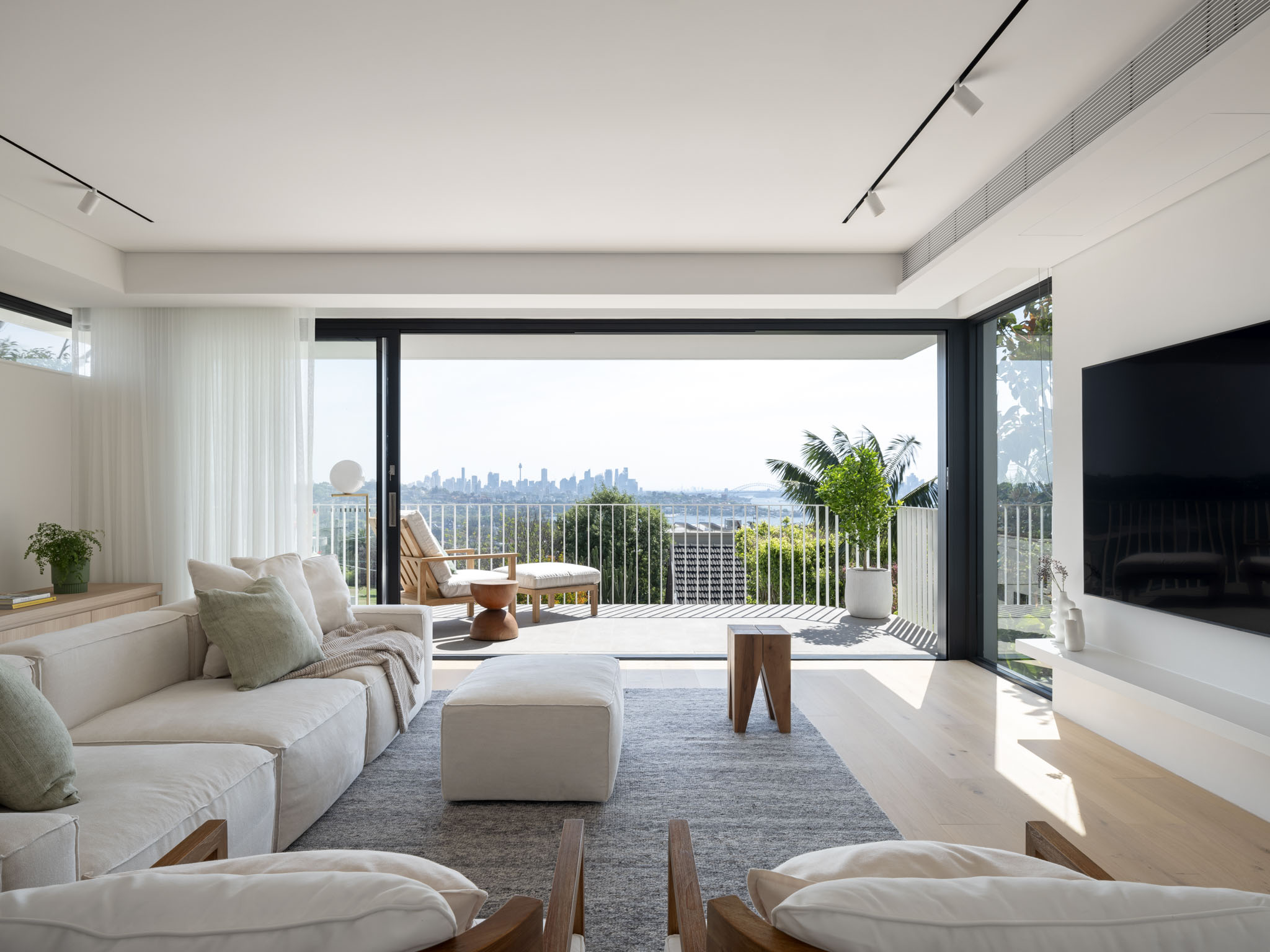
Photo 1: IC HOUSE – Floor to ceiling glazing wraps around the corner of the living room.
Have you ever walked into a room and immediately thought “This feels much larger than I expected”?
Or perhaps you’ve completed a renovation and although not a single square meter was added, the room somehow feels brighter and more generous than it did before.
How is that possible?
The answer lies not in the size of the room but in the way our brains perceive space.
Let’s look at the example of a corner window [or corner glazing] and how it can trick our brains into believing a room is larger than it really is.
The moment you enter a room your brain begins analysing the space around you.
Without even thinking about it, your eyes scan the room, recognizing its shape and identifying where it begins and where it ends. It naturally follows continuous lines and looks for the corners in particular as it clearly defines the limits of the space.
Remove one of those corners however and your perception of the room limits will change.
Take a look at the sketch below.
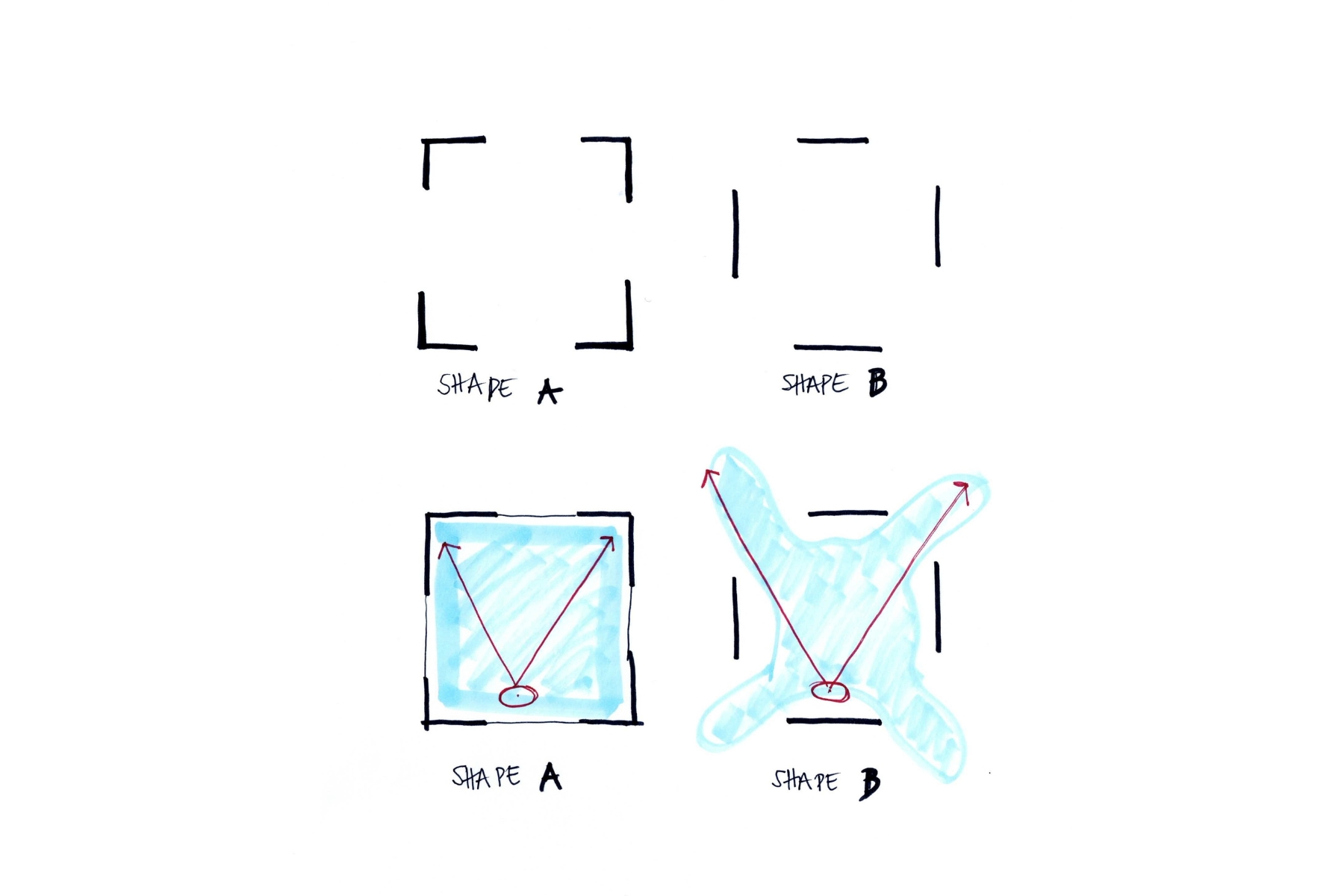
In shape A, although parts of the outline are missing, your brain can quickly connect the corners and close those gaps by forming a proper and defined square. Your mind effortlessly completes the shape.
Now look at shape B. This time the corners are missing. Suddenly you will find it a lot less obvious to connect the four lines and define the shape as a square.
The blue shading represents the enclosed area. In shape A, it reads as a defined square. In shape B, however, the missing corners make the internal area feel less confined, almost as though it could expand beyond its boundaries.
The exact same thing happens when we experience architecture.
This principle is well explained by the Gestalt. Created in the early 20th century in Germany, Gestalt is a theory of perception that later influenced modern art, graphic design and architecture.
The Gestalt is, in simple terms, a theory of perception that explains how our brains organise visual elements into coherent, meaningful wholes. We don’t perceive a room as its isolated elements such as walls, ceiling, furniture. We see it as a group of element and that overall perception can be dramatically influenced by subtle design decisions.
Architects understand this well and will use these principles to create specific results. In this case, it was used to create in the user a sensation of a larger and more generous space without the need to make it bigger in square meters.
The corner window is only one example of the ways architects can subtly “trick the eye” to create a desired experience.
While designing the DH apartment in Kirribilli we used a full-height mirror instead of a window at the edge of the living room. What the mirror is doing, similarly to the corner window, is blurring the edges of the room. The mirror reflects the image of the water, brings it even closer and removes visually one of the room defined edges.
As your eyes move around a room, they follow its edges, searching for the boundaries that define the space. If the room has a corner glazing, those boundaries will become less obvious. Rather than stopping at the wall, your gaze naturally continues through the glass towards the landscape beyond [similarly to shape B in the sketch above]
Your brain begins to perceive the internal and external space as more fluid. The further your eye can travel, the bigger the space feels.
This is why a carefully positioned corner window can dramatically transform how we experience a room.
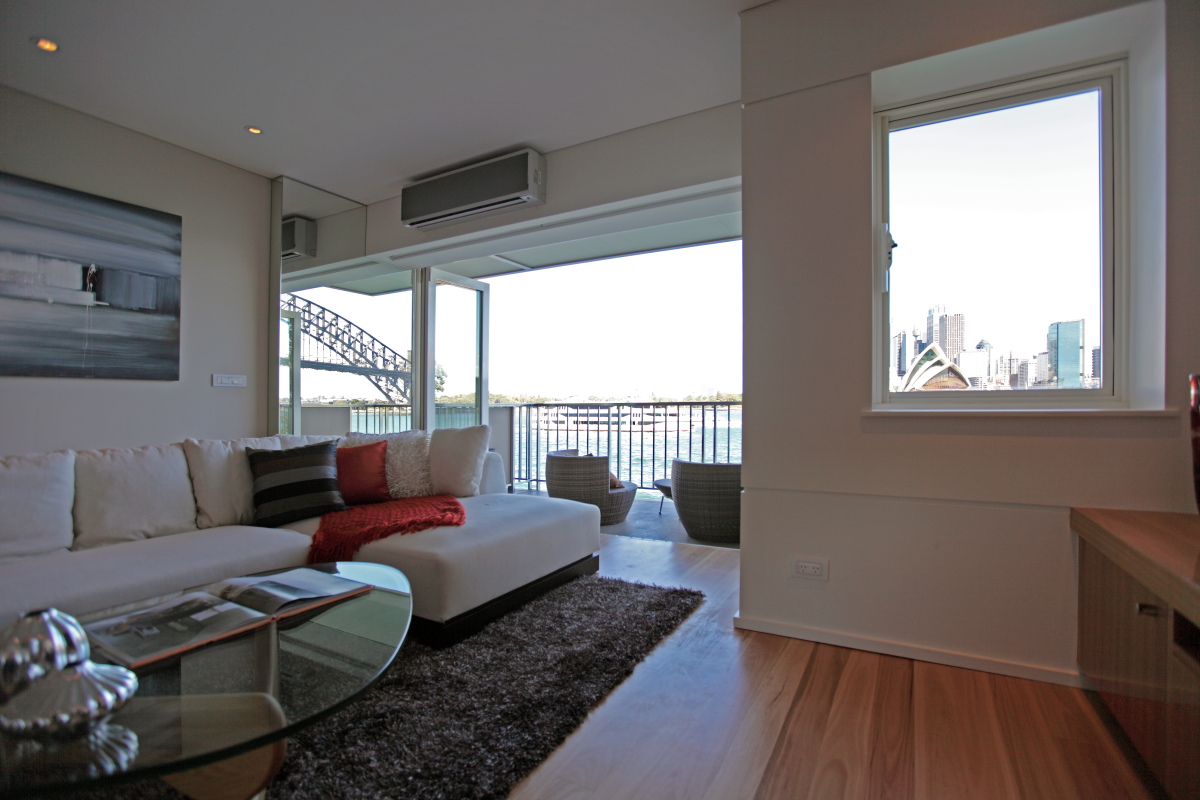
Photo 2: DH APARTMENT – A full-height mirror positioned at the edge of the living room reflects the Harbour beyond and amplifies the feeling of openness.
After the renovation we heard from our clients “The apartment wasn’t this large before”.
The dimensions haven’t changed, only their perception had.
Pay attention to where your eyes naturally travel. Are they following the edges of the room or do they at a point continue to the landscape beyond?
Once you understand how we perceive space, you may start noticing these subtle design decisions everywhere. Every element is designed with a certain intention.
This might sound like an interesting theory of perception, but it also has very practical implications for the way we design and improve your home.
Many homeowners assume that the only way to make the house better is by building an extension. Sometimes that’s true but often thoughtful design can make the existing space feel incredible without adding much area to it.
These opportunities are usually identified at the early stages of the design process and are otherwise difficult to be added later. That’s why involving an architect can make a huge difference on the final result of your renovation.
If you are planning a renovation or a new home, remember that the best architectural decisions aren’t always the most obvious ones. Some small, considered design moves can make a huge difference in making a home feel extraordinary.